Accountability Priorities Flipping Congress in 2026 demands systemic executive oversight alongside progressive policy. Here is how constituent action must drive transparency.
Merging Policy Ambition with Executive Oversight
The electoral shift of the 2026 Midterm Mandate reshaped Congress, equipping a new legislative majority with the institutional leverage needed to counter executive overreach. While enacting progressive policy remains vital, legislative advancement cannot succeed in isolation without robust administrative oversight. True governance requires enforcing constitutional checks and balances alongside economic and social reforms.
To turn electoral success into lasting democratic protection, grassroots advocacy must actively support congressional committees utilizing their subpoena, budgetary, and investigative powers. A progressive platform must combine legislative agendas with rigorous oversight of executive actions, ethical standards, and federal appointments.
Policy & Strategic Context: Oversight Mechanics vs. Administrative Defense
The Progressive Argument
Progressive strategists maintain that democratic resilience relies on active executive branch accountability. With incoming leadership atop panels like the House Committee on Oversight and Government Reform, Congress possesses the procedural tools to examine administrative practices, regulatory compliance, and potential conflicts of interest.
Proponents emphasize that oversight is not a distraction from policy goals, but a constitutional duty. Unchecked executive power undermines public trust, destabilizes regulatory safeguards, and weakens statutory enforceability. Constituent engagement must pressure lawmakers to conduct transparent investigations into federal agency management, corporate Influence in executive decisions, and judicial compliance.
+------------------------------------------------------------+
|    MECHANISMS OF EXECUTIVE ACCOUNTABILITY                  |
+------------------------------------------------------------+
|  SUBPOENA & HEARINGS  |  • Committee-level document        |
|                       |    requests and testimony          |
|                       |  • Public panel disclosures on     |
|                       |    administrative conduct          |
+-----------------------+------------------------------------+
|  POWER OF THE PURSE   |  • Targeted appropriations riders  |
|                       |    and funding limits              |
|                       |  • Statutory restrictions on agency|
|                       |    expenditures                    |
+-----------------------+------------------------------------+
|  CONFIRMATION CHECKS  |  • Rigorous vetting of executive & |
|                       |    judicial nominees               |
|                       |  • Denial of unvetted or conflicted|
|                       |    appointees                      |
+------------------------------------------------------------+
Opposing Views & Institutional Constraints
Conversely, administrative defenders and conservative legal scholars argue that aggressive congressional investigations risk operational paralysis and political overreach. Critics contend that extensive subpoena usage and oversight hearings distract from broader legislative negotiations and compromise executive privilege.
Furthermore, legal representatives for administrative officials often argue that Congress oversteps its constitutional mandate when investigative efforts resemble prosecutorial inquiries rather than legislative policymaking. Balancing rigorous oversight with constitutional boundaries remains a primary structural challenge for the incoming legislative majority.
Core Analysis: Integrating Executive Oversight into the 2026 Midterm Mandate
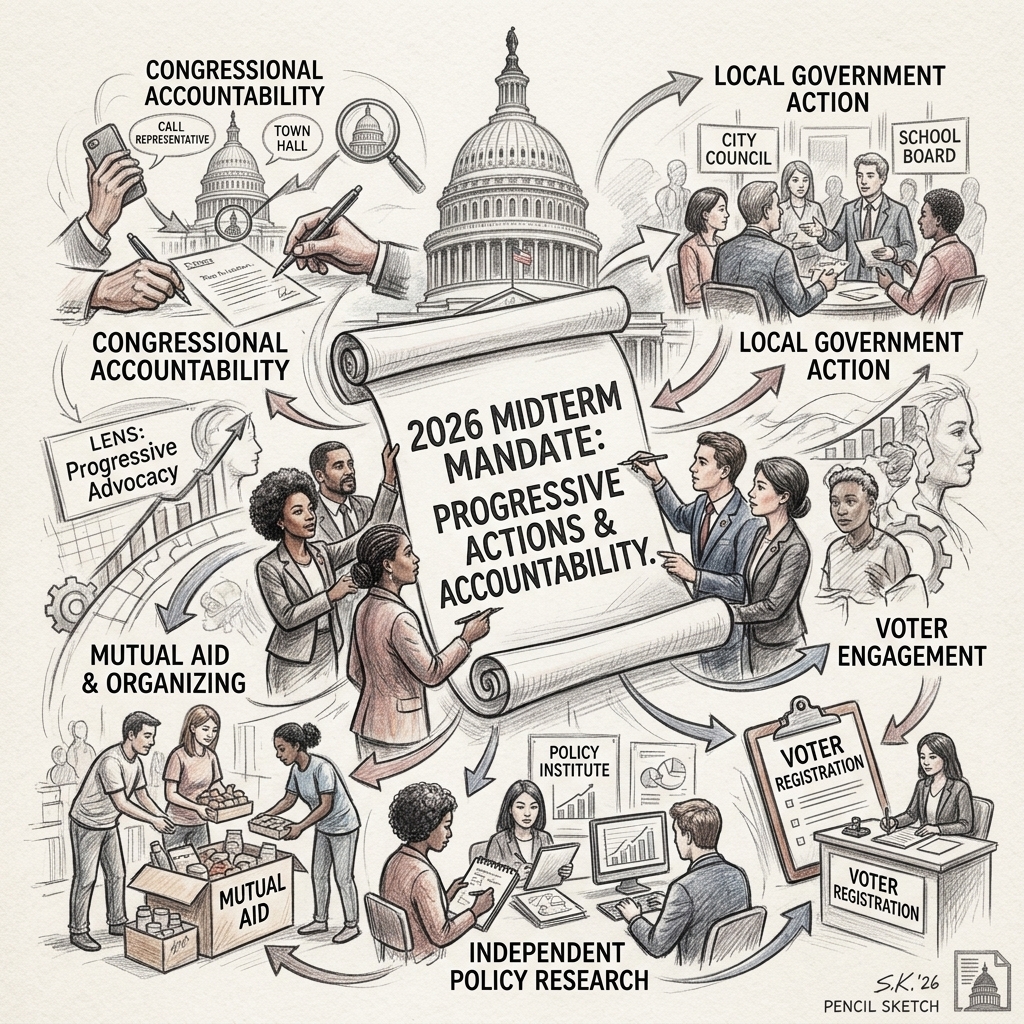
Executing the 2026 Midterm Mandate requires integrating executive oversight into public advocacy efforts. Individuals and grassroots coalitions can drive accountability through four direct actions.
1. Mobilize Public Support for Key Committee Investigations
Constituents must demand that congressional leadership prioritize substantive, data-backed oversight hearings over symbolic gestures. Public pressure ensures that committees focus investigative resources on critical policy sectors, including environmental regulation compliance, corporate lobbying transparency, federal procurement integrity, and civil rights protections. Demonstrating widespread public backing reinforces congressional authority to issue binding subpoenas and compel testimony.
2. Leverage Appropriations Power for Regulatory Compliance
Congress maintains constitutional authority over federal funding. Grassroots advocacy must urge lawmakers to use statutory appropriations language to prevent the misuse of federal funds and enforce executive compliance. By tying agency budgets to transparency benchmarks and statutory mandates, Congress can prevent unauthorized administrative changes without requiring a presidential signature on broader legislative bills.
3. Establish Community-Level Oversight and Whistleblower Support
Grassroots networks must collaborate with independent research organizations, legal defense funds, and whistleblower protections to document local impacts of federal policy shifts. Publicly documenting municipal regulatory rollbacks, environmental violations, or labor enforcement gaps provides congressional committees with actionable data for federal inquiries.
4. Enforce Rigorous Nomination Vetting in the Senate
Senate majorities carry the constitutional duty to evaluate executive nominees and federal judicial appointments. Progressive advocacy must demand strict standards for appointee ethics, financial disclosures, and qualification reviews. Active constituent engagement during nomination hearings ensures that unvetted or conflicted candidates face transparent public scrutiny before confirmation.
Conclusion
Translating electoral shifts into lasting reform requires an approach that pairs policy goals with structured executive oversight. By supporting committee investigations, backing targeted appropriations enforcement, organizing local oversight data, and insisting on thorough Senate vetting, citizens can ensure the 2026 Midterm Mandate delivers both policy progress and constitutional accountability.
Sources
- Democrats, Retaking House Majority, Aim to Derail Trump's Agenda - CBS News
- US Congressional Investigations Ahead of the 2026 Midterm Elections - Morgan Lewis
- America's Political House Has Changed Hands: 5 Things That Could Look Very Different - Economic Times
- House Committee on Oversight and Government Reform Overview - U.S. House Committee on Oversight

The engine of this page is a fusion of the author's singular voice, relentless passion for their subject, and the structured analytical support of Web-based AI. Every article is driven by a powerful editorial stance, a conviction the writer is ready to defend or advocate for. This collaboration ensures the final opinion is anchored in both the emotional resonance of a genuine perspective and the analytical clarity necessary to establish authority and drive public discourse.