
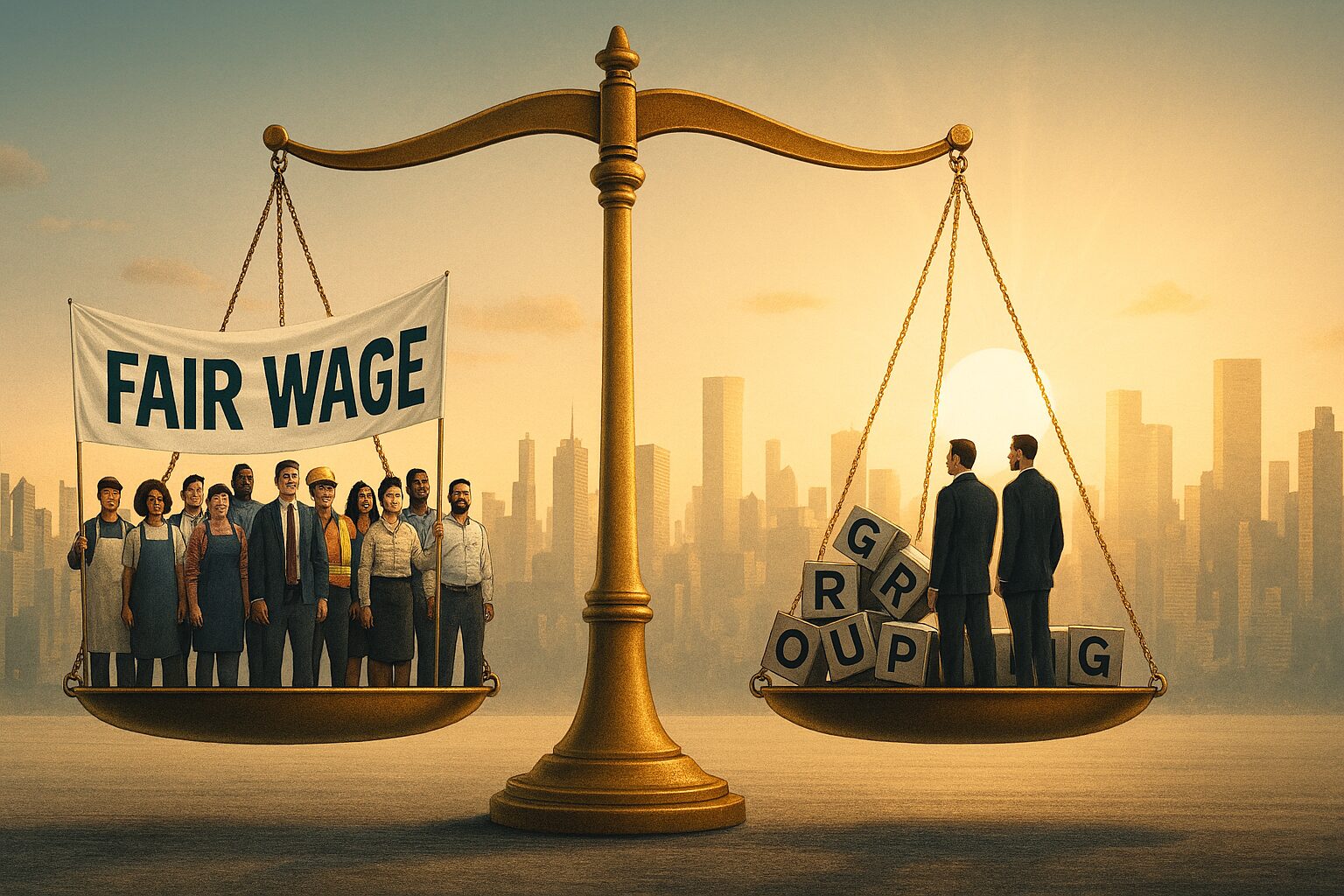
Progressives must shift focus from identity-based Grouping vs Solving structural economic inequality for all working people, ensuring a fair wage.
The progressive wing of the Democratic Party finds itself at a critical juncture. While championing the necessary cause of rectifying historical injustices faced by marginalized groups, there's a growing internal debate about strategic focus. The core issue isn't the righteousness of these social battles, but the extent to which they've eclipsed the fundamental, unifying economic concerns that once defined the movement. The debate has become one of Grouping vs Solving: Are we effectively solving the core issues, or merely organizing into groups to address symptoms? We must integrate our focus on identity with a broader, unifying economic platform, centered on ensuring a fair wage for all Americans. This means understanding that structural economic reform is the tide that lifts all boats, particularly those of marginalized communities.
Policy Summary: The Economic vs. Identity Focus
For decades, the progressive movement has fought on two fronts: advancing civil and social rights for specific marginalized communities and advocating for structural economic change for the entire working class. Recently, the conversation has dramatically shifted toward the former, focusing on specific identity-based issues like targeted equity measures, specialized representation, and cultural recognition. This shift is vital for addressing systemic discrimination but has often been framed in opposition to a universal, class-based approach.
The opposing argument, often emanating from the center and right, posits that this focus on specific identity groups alienates the broader, economically-distressed working-class—especially in rural and exurban areas—leading to electoral losses. They argue that by prioritizing grouping people by identity and tackling problems group-by-group, progressives miss the opportunity to unite a broad coalition under a banner of economic fairness. Some critics also suggest that focusing on identity issues, while neglecting universal economic pain, cedes the economic argument to the right and unintentionally allows corporate interests to flourish behind a smokescreen of cultural debate.
Core Progressive Analysis: The Unifying Power of Economic Justice
A true Progressive Advocacy strategy recognizes that economic vulnerability disproportionately affects marginalized communities. The struggle for racial, gender, and disability justice is intrinsically linked to the fight against economic exploitation. However, the solution lies not just in naming the group and their struggle, but in enacting universal policies that disproportionately benefit those at the bottom.
If the goal is to dismantle structural oppression, we must attack the root of that structure: economic inequality. A universal policy like a robust, living fair wage or a guaranteed basic income is a powerful engine for equity. It immediately benefits the single mother, the formerly incarcerated worker, the person with a disability, and the person of color who are statistically over-represented in low-wage work. By unifying the platform around economic security, the progressive movement can effectively argue: We are fighting for everyone who works for a living.
Refocusing the Debate: Moving Beyond Grouping vs Solving
The danger in the current framing is the perception of a zero-sum game: that advocating for identity justice detracts from economic justice. This is a false dichotomy. The challenge is in the rhetoric and prioritization. When the progressive platform sounds like a list of distinct demands for disparate groups, it fails to build the necessary majority. When the platform is anchored by a massive, unifying demand like a living wage, universal healthcare, or subsidized child care, the benefits for specific marginalized groups become evidence of the policy's necessity, not its sole purpose.
We must pivot from a posture that accepts the right-wing's framing of "identity politics" to one that centers structural reform. Imagine the power of a campaign that says: "We are passing a $20 minimum wage because in the wealthiest nation on Earth, no one who works 40 hours a week should live in poverty. And by the way, this will be the most significant anti-poverty program for Black women and immigrants in a generation." This approach moves the conversation away from Grouping vs Solving by demonstrating that the economic solution is the equity solution. The time is now for progressives to aggressively reclaim the economic high ground.
Conclusion and Call-to-Action
The progressive movement's historical strength has always been its moral clarity and its commitment to the universal well-being of the working class. While the battles for social and identity-based justice are essential and ongoing, we must strategically recenter the fundamental goal of economic equality. This approach is not a retreat from identity; it is the most effective path toward achieving true equity for all marginalized communities by addressing the root cause of their disproportionate suffering.
The call-to-action is clear: Progressive leaders in Congress must prioritize comprehensive economic legislation—like aggressive federal minimum wage hikes and universal social programs—as the unifying banner of the movement. Stop asking only what we can do for one group, and start asking what we can do for the working class as a whole, knowing that the most vulnerable among them will see the greatest gains.
Sources
- The Progressive Case for Economic Universalism - The Century Foundation
- Minimum Wage Increases and the Reduction of Poverty - Brookings Institution
- The State of the Working Class in America - Economic Policy Institute

The engine of this page is a fusion of the author's singular voice, relentless passion for their subject, and the structured analytical support of Web-based AI. Every article is driven by a powerful editorial stance, a conviction the writer is ready to defend or advocate for. This collaboration ensures the final opinion is anchored in both the emotional resonance of a genuine perspective and the analytical clarity necessary to establish authority and drive public discourse.