
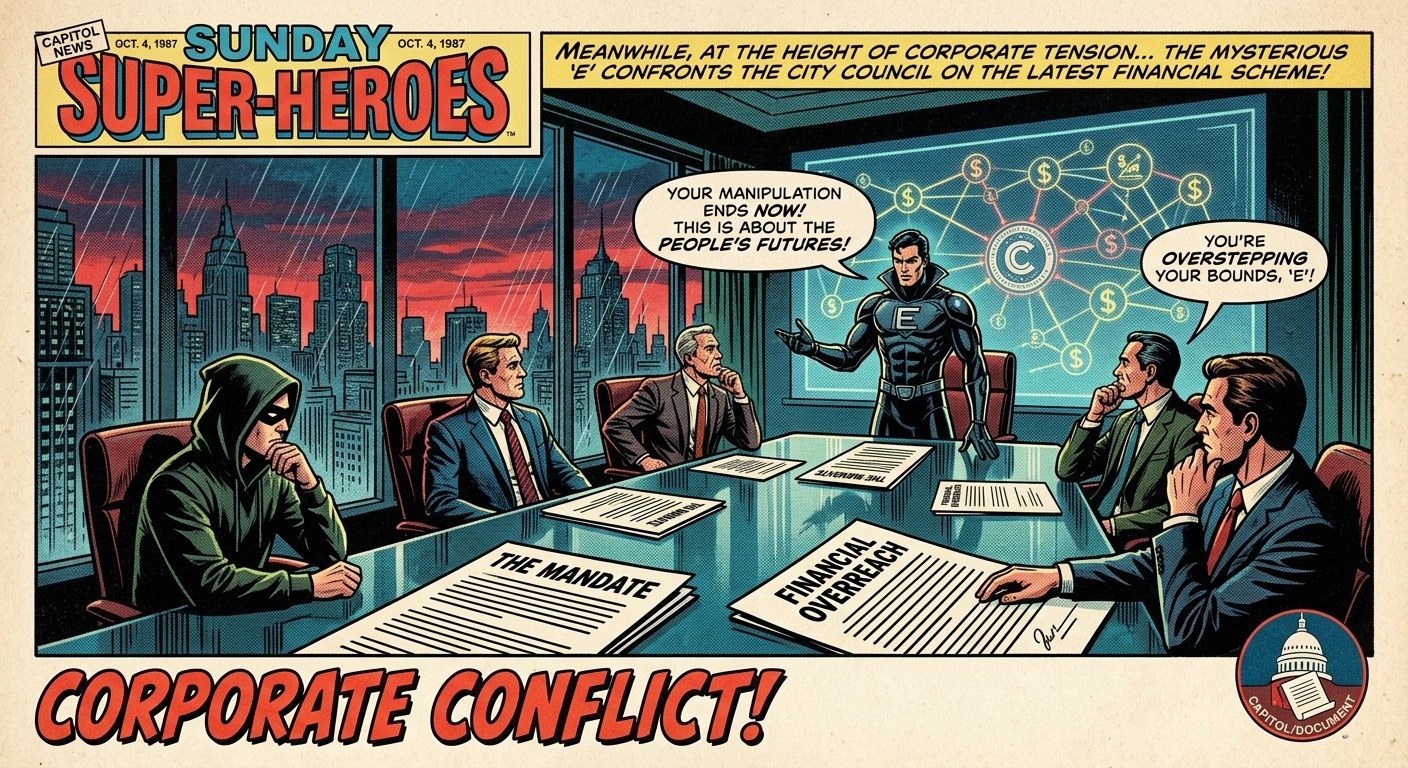
An analysis of corporate impunity and systemic deregulation through the lens of the five operational pillars of enterprise criminality.
Introduction
When law enforcement agencies and policy analysts evaluate systemic corruption, they rely on a structural framework to identify how white-collar entities exploit institutional loopholes. The pillars of enterprise criminality demonstrate how large-scale criminal enterprise operates not in a vacuum, but through deliberate structures designed to extract profit while evading public accountability. From a progressive perspective, enterprise criminality is not merely a collection of isolated offenses by rogue actors; it is the predictable byproduct of unbridled corporate power, regulatory capture, and structural inequality. Addressing these abuses requires understanding the institutional mechanics that allow high-level financial and corporate syndicates to thrive at the expense of working families and public trust.
Policy Summary: The Architecture of Enterprise Misconduct
At its core, the study of enterprise-level misconduct examines how structured organizations build resilience against legal enforcement. Conventional criminology often focuses on individual street-level offenses, but enterprise criminology addresses complex organizational behavior that inflicts broad societal harm.
The standard legal framework outlines five fundamental operational characteristics common to enterprise-level organizations:
- Hierarchical Command and Control: A centralized leadership structure that isolates executives while directing lower-level execution.
- Systematic Illicit Revenue Generation: Continuous financial schemes—such as wage theft, fraud, or market manipulation—that siphon public wealth into private hands.
- Coercion, Intimidation, and Power Dynamics: The use of economic leverage, NDAs, or retaliatory litigation to suppress whistleblowers and worker organizing.
- Institutional and Public Corruption: Systematic efforts to compromise regulatory oversight through lobbyist influence, campaign finance leverage, and political patronage.
- Obstruction, Secrecy, and Cover-ups: Destruction of records, opaque offshore financial networks, and coordinated public relations campaigns designed to derail oversight.
The Opposing Perspective: Market Efficiency and Over-Regulation Concerns
Critiques from free-market advocates and industry legal defense teams argue that applying enterprise crime frameworks to legal corporate entities risks over-criminalizing standard business activities. Opponents contend that broad regulatory statutes like RICO (Racketeer Influenced and Corrupt Organizations Act) can be weaponized against legitimate firms engaged in aggressive market competition. They argue that aggressive prosecution of corporate leadership creates chilling effects on innovation, discourages risk-taking, and burdens compliance departments with costly bureaucratic hurdles that ultimately hurt consumers.
Core Analysis: The Structural Reality of the Pillars of Enterprise Criminality
From a progressive policy viewpoint, the distinction between illegal criminal syndicates and corporate misconduct is often a matter of legal privilege rather than harm inflicted on society. The pillars of enterprise criminality explain how concentrated economic power converts legal gaps into systemic exploitation.
PILLARS OF ENTERPRISE CRIMINALITY
| Hierarchical Control | Insulates top executives; directs lower-level execution |
| Revenue Generation | Structured, continuous profit via fraud or exploitation |
| Coercion & Power | Suppresses whistleblowers and workplace organizing |
| Institutional Corruption | Exploits regulatory gaps and lobbying channels |
| Obstruction & Secrecy | Conceals records and evades public accountability |
1. Command Structure and Executive Insulation
Under current corporate jurisprudence, top executives frequently evade personal criminal liability through the legal doctrine of "willful blindness." Hierarchical compartmentalization ensures that while boardrooms set aggressive profit targets, lower-level managers bear the legal fallout when those targets require breaking labor or environmental laws. Progressive reforms must insist on individual executive accountability to break the shield of corporate hierarchy.
2. Regulatory Capture as Institutional Corruption
When private corporations systematically fund political campaigns and lobby regulatory agencies to weaken safety or financial guidelines, they carry out institutional corruption. The revolving door between regulatory bodies and private firms creates an environment where oversight agencies become protectors of the industries they were created to supervise.
3. Economic Coercion and Public Loss
While traditional syndicates use physical threats, corporate enterprises often deploy economic coercion. Non-disclosure agreements, aggressive arbitration clauses, and threats of blacklisting serve as modern tools of intimidation that keep systemic abuse hidden from the public. Furthermore, the financial gains from corporate offenses are routinely routed through offshore tax havens and shell companies, depriving public infrastructure, healthcare, and education of vital resources.
Rebuttal to Deregulatory Arguments
The claim that strict accountability stifles innovation ignores the immense societal cost of unpunished corporate misconduct. Financial crises, environmental disasters, and wage suppression do far greater damage to economic vitality than robust regulatory compliance. Without strong statutory guardrails and public oversight, corporate self-regulation consistently yields profits for executive insiders while shifting systemic risks onto working people.
Conclusion
Dismantling enterprise criminality requires moving beyond token civil fines that corporations write off as the cost of doing business. True legislative accountability demands closing regulatory loopholes, empowering public regulatory agencies, enforcing strict executive liability, and protecting whistleblowers who expose structural abuses.
Sources
- Understanding Organized Crime and Enterprise Corruption - [U.S. Department of Justice]
- Corporate Crime and Regulatory Oversight Report - [Congressional Research Service]
- RICO Act Framework and White-Collar Prosecution - [Legal Information Institute]