The Trump administration’s lethal boat strikes off Venezuela, paired with shifting legal rationales, demonstrate a dangerous overreach.
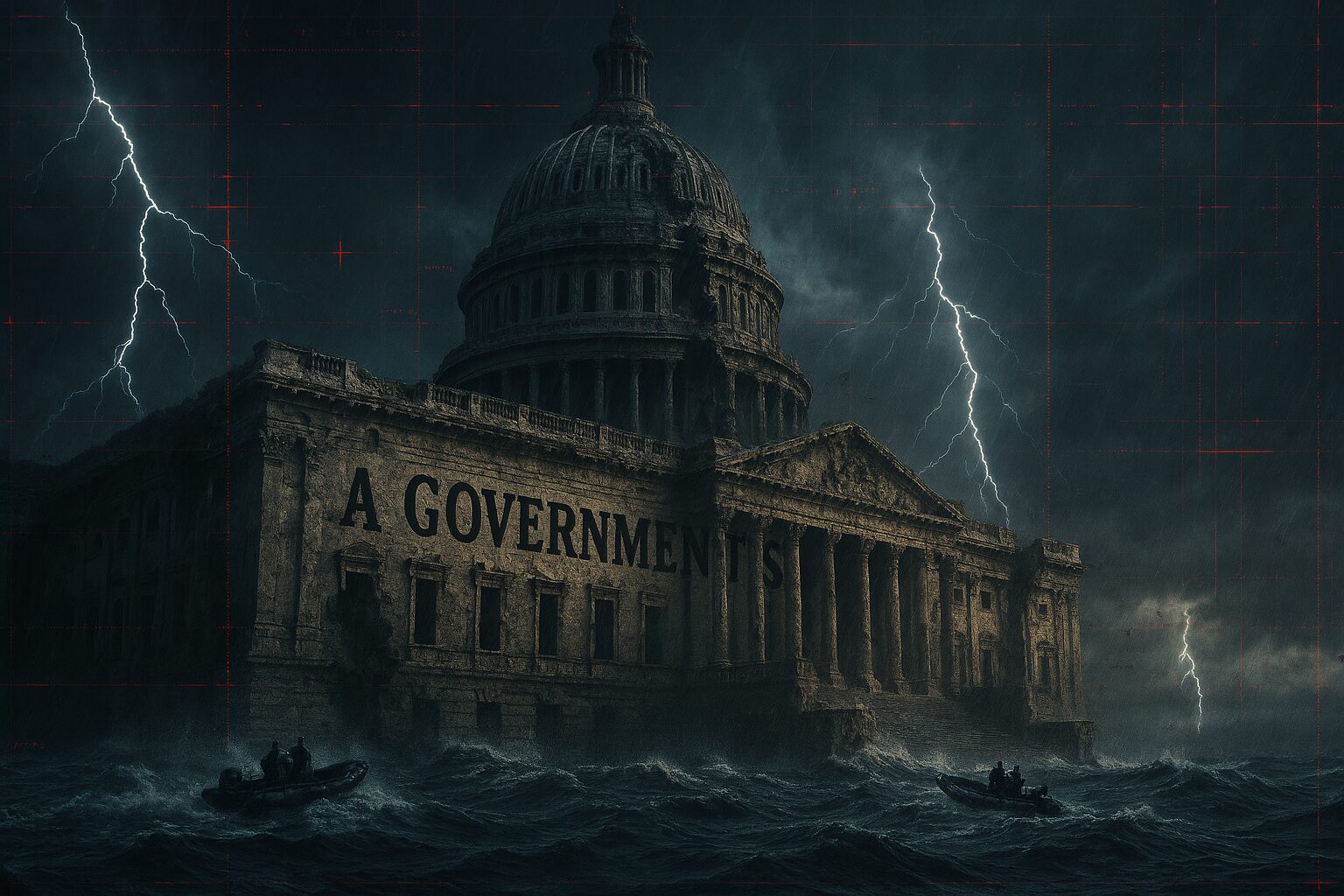
The Trump administration’s recent decision to launch a series of lethal military strikes against alleged drug-smuggling vessels originating near Venezuela is more than a controversial foreign policy choice; it represents a profound and potentially unconstitutional expansion of executive power. This action, coupled with the administration’s inconsistent and often contradictory public justifications, underscores a dangerous pattern of unilateral military action that demands immediate legislative intervention. The shifting legal rationale provided by top administration officials, including the Defense Secretary and the President himself, offers direct evidence that the current executive branch is A Government's Crime against the separation of powers and international law, signaling a clear case for commencing the constitutional process of accountability.
Policy Summary and Arguments Against Intervention
The operation began in September 2025, when the U.S. military initiated a series of kinetic strikes on small vessels in the Caribbean Sea and Eastern Pacific, which the administration designated as "narco-terrorist" targets, primarily linked to Venezuela. The administration, citing the threat of illicit drugs entering the U.S., has confirmed dozens of strikes resulting in numerous fatalities.
The administration’s defense rests on the claim that these strikes are a necessary and legitimate form of self-defense against non-state actors—drug cartels—and therefore fall under the President's inherent authority as Commander-in-Chief. They argue that the sheer volume of illicit narcotics entering the country constitutes an "assault on the American people," justifying a military response akin to an armed conflict. White House officials have repeatedly stressed that the operations are conducted within the laws of armed conflict, even classifying the deceased individuals as "unlawful combatants." Furthermore, some supporters frame this aggressive posture as a necessary step toward regime change in Venezuela, which they argue is paramount for regional stability.
The Progressive Analysis: Unconstitutional Warfare and Cover-Ups
From a Progressive Advocacy standpoint, the administration's actions and subsequent excuses are not merely policy disagreements—they are a brazen challenge to the rule of law and the constitutional authority of Congress. The administration’s shifting narrative, which initially described a single strike but later confirmed follow-up strikes and an increasing number of fatalities, speaks volumes. Defense Secretary Pete Hegseth's claim of having "watched it live" and then later invoking the "fog of war" when pressed on reports of attacking survivors creates a devastating lack of faith in the integrity of the mission's accounting. President Trump's own contradictory statements—denying knowledge of a second strike one moment, and then broadly supporting the mission the next—further reveal a dangerous lack of centralized, legal command.
The core of the issue is the administration’s apparent effort to create a new, unilateral authorization for force. By classifying drug-smuggling organizations as "narco-terrorist" entities with whom the U.S. is in a "non-international armed conflict," the executive branch attempts to sidestep the War Powers Resolution and Congress's exclusive constitutional authority to declare war. This is a profound and fundamental assault on the balance of power. The U.S. has traditionally treated maritime drug interdiction as a law enforcement issue, not a military one resulting in extrajudicial killings. The classified legal opinion from the Department of Justice, which reportedly focuses on targeting the commodity (cocaine) rather than the people, is a clear legal fiction designed to cloak lethal military action in a thin veil of legality.
The Imperative of Congressional Action Against A Government's Crime
The response to the boat attacks is a case study in executive overreach that progressive voices warned about for years. The escalating military action in the region—including the massive buildup of U.S. assets near Venezuela—goes far beyond counternarcotics operations and appears to be a pretext for regime change, a costly and disastrous foreign policy objective that the American public soundly rejects. The introduction of a bipartisan War Powers Resolution by members of Congress is a crucial step in reasserting legislative authority, but it may not be enough to halt a determined and aggressive executive branch.
The refusal to provide clear, consistent, and public legal justification for the lethal strikes, the misleading statements to the public and Congress, and the apparent willingness to circumvent constitutional checks represent offenses that strike at the heart of democratic governance. These actions are not merely instances of poor judgment; they are high offenses that threaten the constitutional order. The standard for presidential accountability must be upheld.
Conclusion and Call-to-Action
The administration's behavior surrounding the Venezuela boat attacks—its expansion of war-making authority, its obfuscation of facts, and its clear disregard for international and constitutional law—demands the highest form of accountability available to the legislative branch. To protect the Constitution and prevent this dangerous precedent from becoming normalized, Congress must immediately undertake a formal inquiry into the legality and execution of these military strikes.
The House of Representatives must fulfill its constitutional duty and initiate an impeachment investigation. The evidence of a unilateral, undeclared war and the subsequent systemic deception of the American public and Congress constitutes an impeachable offense—a "High Crime or Misdemeanor" against the constitutional order. Anything less would be a dereliction of duty, allowing A Government's Crime to stand unchallenged and further eroding the checks and balances essential to our democracy. The time for caution has passed; the time for accountability is now.
Sources
- The shifting responses of Hegseth, Trump and others on the lethal boat strikes - The Washington Post
- 2025 United States military strikes on alleged drug traffickers - Wikipedia - Wikipedia (Note: Used for factual summary of events)
- How the Trump administration's account of Sept. 2 boat strike has evolved - CBS News
- McGovern, Massie, Castro Introduce Bipartisan War Powers Resolution to Block Trump Administration’s Escalating Hostilities Toward Venezuela - Office of Rep. Jim McGovern
- Left-right backlash against war with Venezuela is growing - Responsible Statecraft
- Impeachment and the Constitution - Congress.gov

The engine of this page is a fusion of the author's singular voice, relentless passion for their subject, and the structured analytical support of Web-based AI. Every article is driven by a powerful editorial stance, a conviction the writer is ready to defend or advocate for. This collaboration ensures the final opinion is anchored in both the emotional resonance of a genuine perspective and the analytical clarity necessary to establish authority and drive public discourse.