How corporate self-dealing in Congress exploits working Alaskans and underscores the urgent need for systemic ethical reform and voter action.
Policy Summary: Tariffs, Corporate Refunds, and the Working Class
Over the past several congressional sessions, Federal trade policies under Executive emergency authorities—such as the International Emergency Economic Powers Act (IEEPA)—have placed sweeping duties on critical imported goods. While the stated goal of these trade levies was to protect domestic manufacturing, the practical reality for consumers in remote states like Alaska has been record inflation on food, construction supplies, and daily household goods.
┌────────────────────────────────────────────────────────────────────────┐
│                        THE TARIFF VALUE CHAIN                          │
├────────────────────────────────────────────────────────────────────────┤
│  1. Executive Tariffs Enacted ──► Increases Cost of Imported Goods     │
│  2. Family-Owned Conglomerates ─► Pass Tariff Costs to End Consumers   │
│  3. Trade Court Orders Refunds ─► Importers Retain Millions in Duties  │
│  4. Working Class Consumers ────► Left with Higher Prices & No Refund  │
└────────────────────────────────────────────────────────────────────────┘
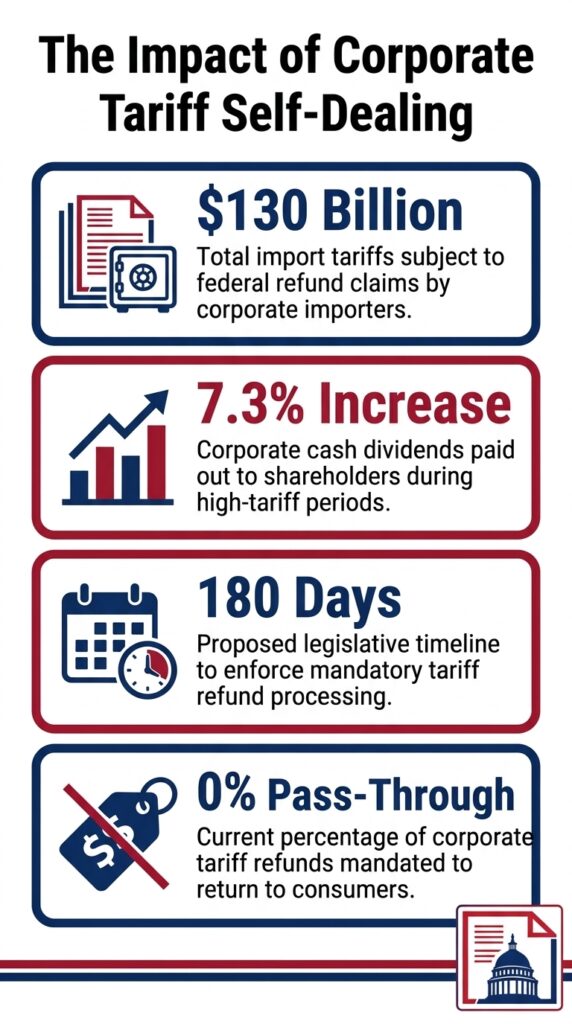
When trade courts or federal legislation challenge the lawfulness of specific tariff regimes, importers of record become eligible for massive duty refunds paid directly out of the U.S. Treasury. However, small businesses and everyday consumers who paid inflated retail prices are routinely left out of the restitution process. Instead, large corporate conglomerates retain these windfalls while continuing to benefit from elevated price baselines.
Opposing Arguments & The Defense of Duty Protections
Proponents of current trade enforcement mechanisms argue that protective tariffs are essential to maintaining domestic competitiveness against subsidized foreign markets. Defenders of existing corporate duty refund procedures maintain that:
- Importers Bear the Primary Financial Risk: Importers of record pay initial duty fees directly to U.S. Customs and Border Protection, making them the lawful entities eligible for statutory trade refunds under federal trade statutes.
- Market Elasticity Adjustments: Corporate price adjustments respond dynamically to global supply chain volatility rather than legislative vote-trading.
- Fiduciary Responsibility: Corporate directors have a legal duty to maximize shareholder value, including capitalizing on tax and trade refund provisions established by federal law.
While these arguments attempt to frame tariff advocacy as standard economic stewardship, they ignore the profound ethical breach when legislators leverage committee votes to protect family corporate bottom lines.
Core Progressive Analysis: Corporate Greed and the Tariff Scandal of Alaska
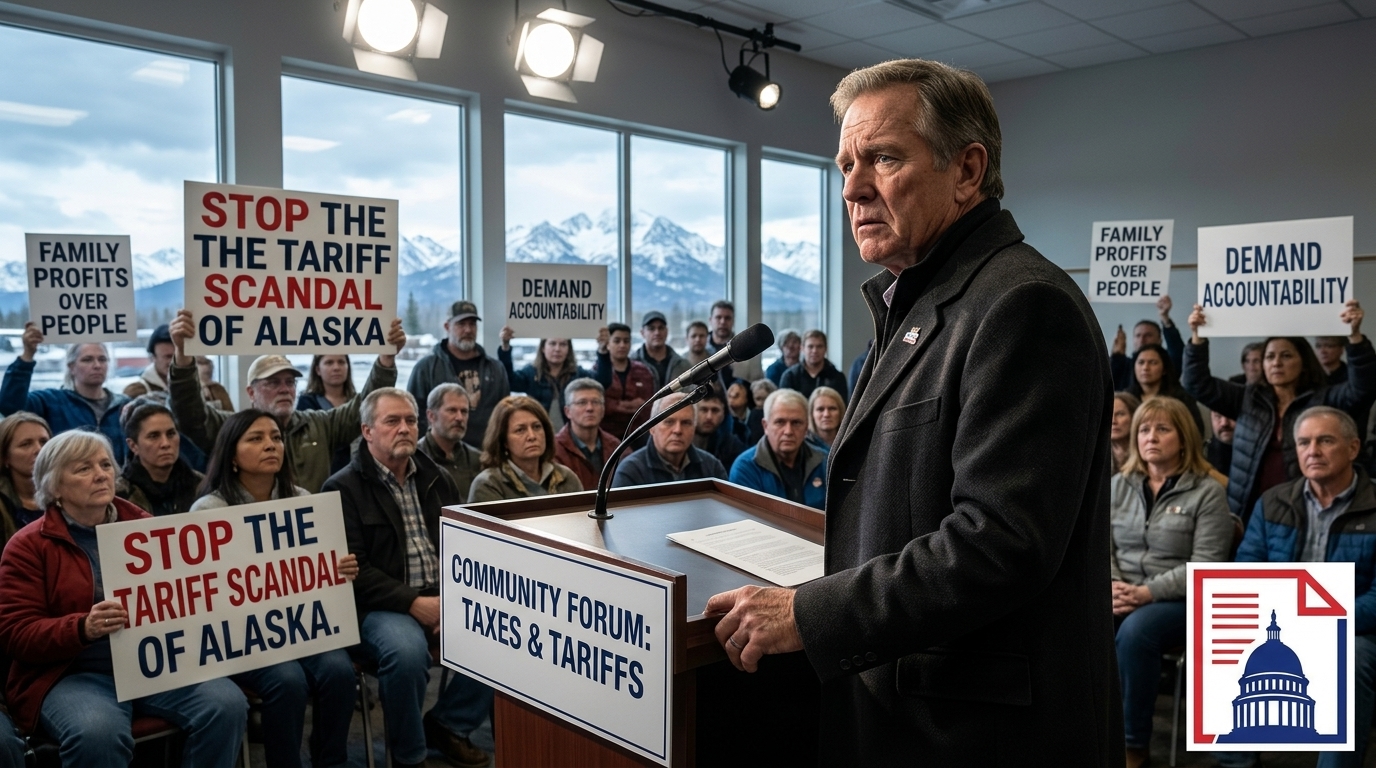
The core issue in the Tariff Scandal of Alaska rests upon the intersection of public power and personal profit. Senate voting records reveal repeated blockades against legislative measures aimed at terminating damaging import tariffs. Simultaneously, family-held corporate entities linked to legislative decision-makers have enacted strategic price hikes, yielding record dividends for executive shareholders.
This dynamic is not an isolated anomaly; it reflects structural deficiencies within federal ethics oversight:
- Unchecked Wealth Accumulation: Members of Congress routinely enter office with modest wealth and leave with multi-million-dollar portfolios, fueled by non-public market insight and favorable legislative action.
- Loophole-Ridden Restitution: Under current trade refund frameworks, corporate importers can collect millions in federal duty returns without passing a single dollar back to the working-class consumers who originally absorbed the cost increases.
- Erosion of Public Trust: When lawmakers prioritize corporate dividend payouts over consumer relief, public trust in democratic institutions collapses.
Progressive policy requires robust ethics legislation, including strict bans on individual stock ownership for members of Congress, full transparency on family business holdings, and mandatory consumer pass-through requirements for all corporate tariff refunds.
Conclusion
The exploitation seen in Alaska underscores the urgent necessity of holding elected officials accountable at the ballot box. When elected leaders prioritize personal and corporate enrichment over the economic well-being of their constituents, democracy suffers. The most effective counterforce against corrupt legislative self-dealing is an engaged, active electorate. Your vote is your power—exercise it to restore integrity to public service. GO VOTE! 🗳️
Sources
- Supreme Court Tariff Refund Litigation and Small Business Impact - CapRadio / NPR
- Senate Record on Tariffs and Corporate Dividend Growth - DSCC Reports
- Senate Finance Committee Probes Tariff Conflict of Interest Concerns - U.S. Senate Committee on Finance

The team is a fusion of human curiosity, passion, and a relentless pursuit of truth—structured, prompted, and informed by Web-based AI. Every piece begins with a question, a spark of insight, or a challenge to conventional thinking. Through thoughtful collaboration between human intent and artificial intelligence, the content emerges as a reflection of both emotional depth and analytical clarity.
The goal is not just to inform, but to empower. By leveraging AI as a tool for exploration—not automation—the team can craft work grounded in facts, shaped by inquiry, and driven by a commitment to clarity and accountability.