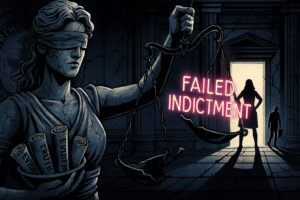
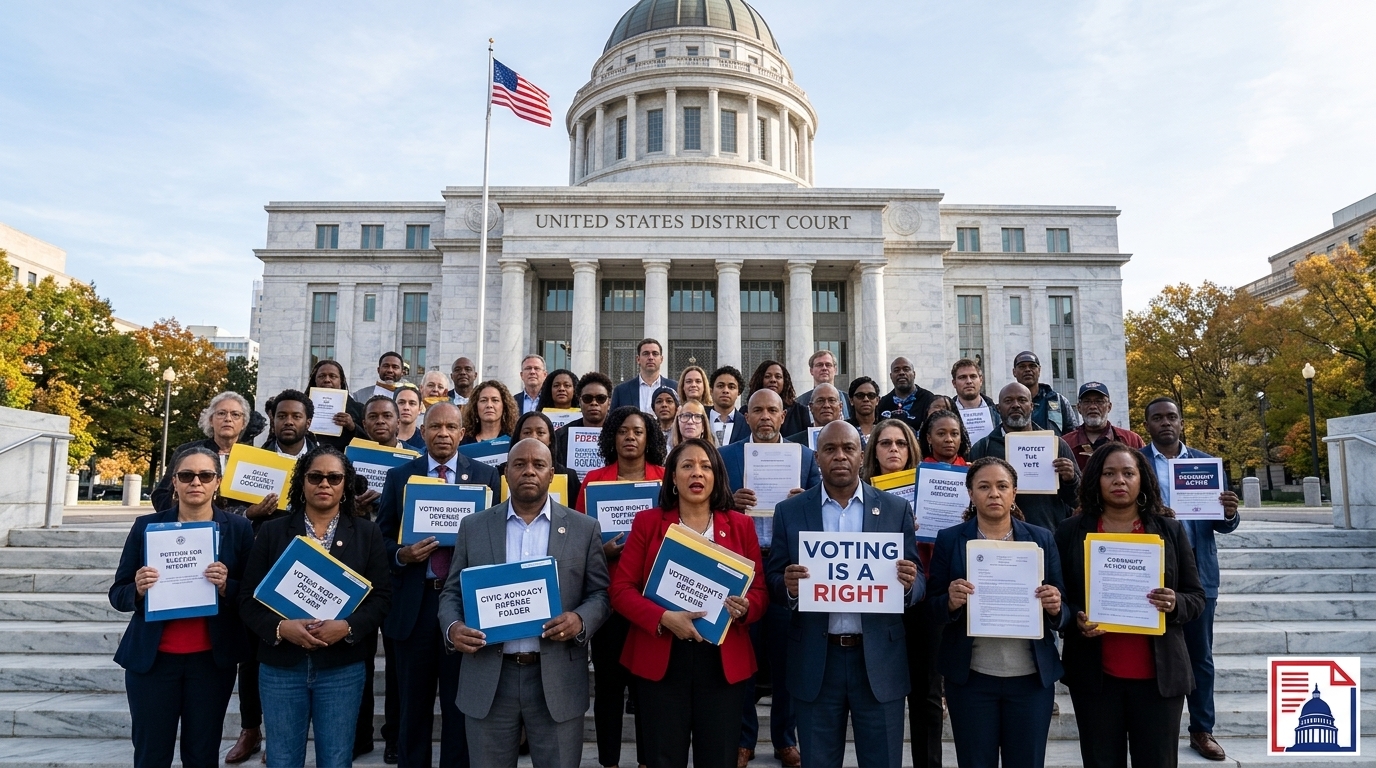
Explore the frontline legal battles safeguarding our fundamental right to vote amid unprecedented federal executive overreach and voter suppression.
As the nation navigates a pivotal electoral cycle, our democratic institutions face an unprecedented structural test. We are living through what legal experts increasingly define as The Constitutional Crisis of our Lives, where fundamental ballot access is subjected to continuous coordinated legal pressure. From coordinated executive attempts to sideline thousands of legally cast ballots to broad administrative subpoenas targeting state election authorities, the architecture of free and fair elections is under relentless strain. Prominent voting rights attorney Marc Elias recently broke down these urgent developments in a comprehensive legal briefing, issuing a direct call to action for citizens, lawmakers, and legal coalitions to stand firm against executive interference and safeguard every eligible vote.
Policy Summary & Legal Landscape
At the center of the current legislative and judicial battlefield is a clash between state-administered election sovereignty under the Elections Clause and aggressive federal intervention tactics.
Opposing Arguments & Claims
Proponents of federal intervention argue that administrative oversight and heightened document verification policies—such as the Department of Justice’s Voter Data Transmission Policy—are necessary to maintain voter roll integrity, prevent noncitizen voting, and ensure uniform standards across jurisdictions. Proponents contend that proactive administrative intervention protects against potential irregularities and reinforces public confidence in the administration of elections.
The Progressive Rebuttal & Core Analysis
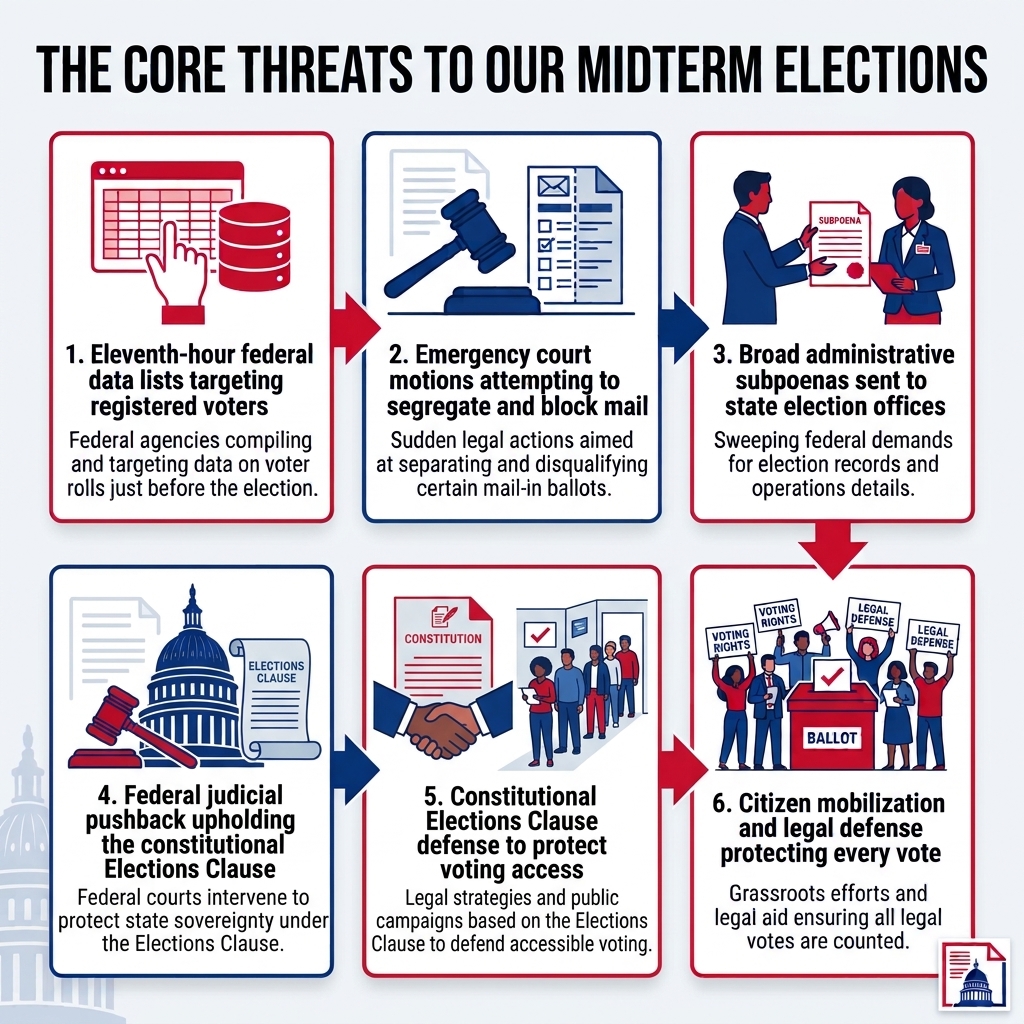
Conversely, voting rights advocates and progressive legal scholars argue that these federal actions constitute a severe abuse of executive power designed to systematically disenfranchise eligible voters. The central data-driven argument from a progressive lens demonstrates that broad, eleventh-hour federal directives and data-matching lists possess high error rates that disproportionately target minority, low-income, and newly registered voters. Rather than securing elections, these tactics sow chaos, intimidate local election officials, and undermine constitutional separation of powers.
Case Summaries: Claims vs. Contrary Positions
Recent high-stakes litigation underscores the gravity of these competing legal visions:
The California Ballot Segregation Case (DOJ v. California / State Election Officials):
- What is being claimed: The Department of Justice claimed that approximately 20,000 registered voters in California were "likely noncitizens" and sought emergency court orders to force state and local officials to set aside, segregate, or refuse to tabulate their mail-in ballots.
- The Contrary Position & Judicial Outcome: Voting rights groups, backed by civil rights organizations, argued that the DOJ’s eleventh-hour list relied on flawed data and unconstitutional coercion that violated the Elections Clause. Federal courts—including the Ninth Circuit Court of Appeals—twice rejected the government's motions, ruling that forcing states to isolate specific ballots on the eve of an election would cause catastrophic disruption without clear legal justification.
Nationwide Voter Record Subpoenas & Data Transmission Policies:
- What is being claimed: Federal authorities issued sweeping demands and subpoenas to election officials across numerous states to obtain underlying voter registration files and enforce aggressive purges under threat of legal penalty.
- The Contrary Position: Civil rights litigators and state coalitions countered that these sweeping data demands violate statutory boundaries, bypass established administrative procedures, and intimidate bipartisan local election administrators working to process legitimate ballots.
Conclusion
The integrity of our democratic republic depends upon robust civic participation and unwavering defense of the franchise. As legal battles continue to unfold across federal courts, the imperative for public awareness and community mobilization has never been more urgent. Citizens must remain informed, support voting rights advocacy networks, and ensure that their local representatives uphold constitutional governance.
Sources
- Marc Elias / Democracy Docket Live Briefing - Democracy Docket
- Appeals Court Rejects DOJ Bid to Block California Ballots - Democracy Docket

The team is a fusion of human curiosity, passion, and a relentless pursuit of truth—structured, prompted, and informed by Web-based AI. Every piece begins with a question, a spark of insight, or a challenge to conventional thinking. Through thoughtful collaboration between human intent and artificial intelligence, the content emerges as a reflection of both emotional depth and analytical clarity.
The goal is not just to inform, but to empower. By leveraging AI as a tool for exploration—not automation—the team can craft work grounded in facts, shaped by inquiry, and driven by a commitment to clarity and accountability.