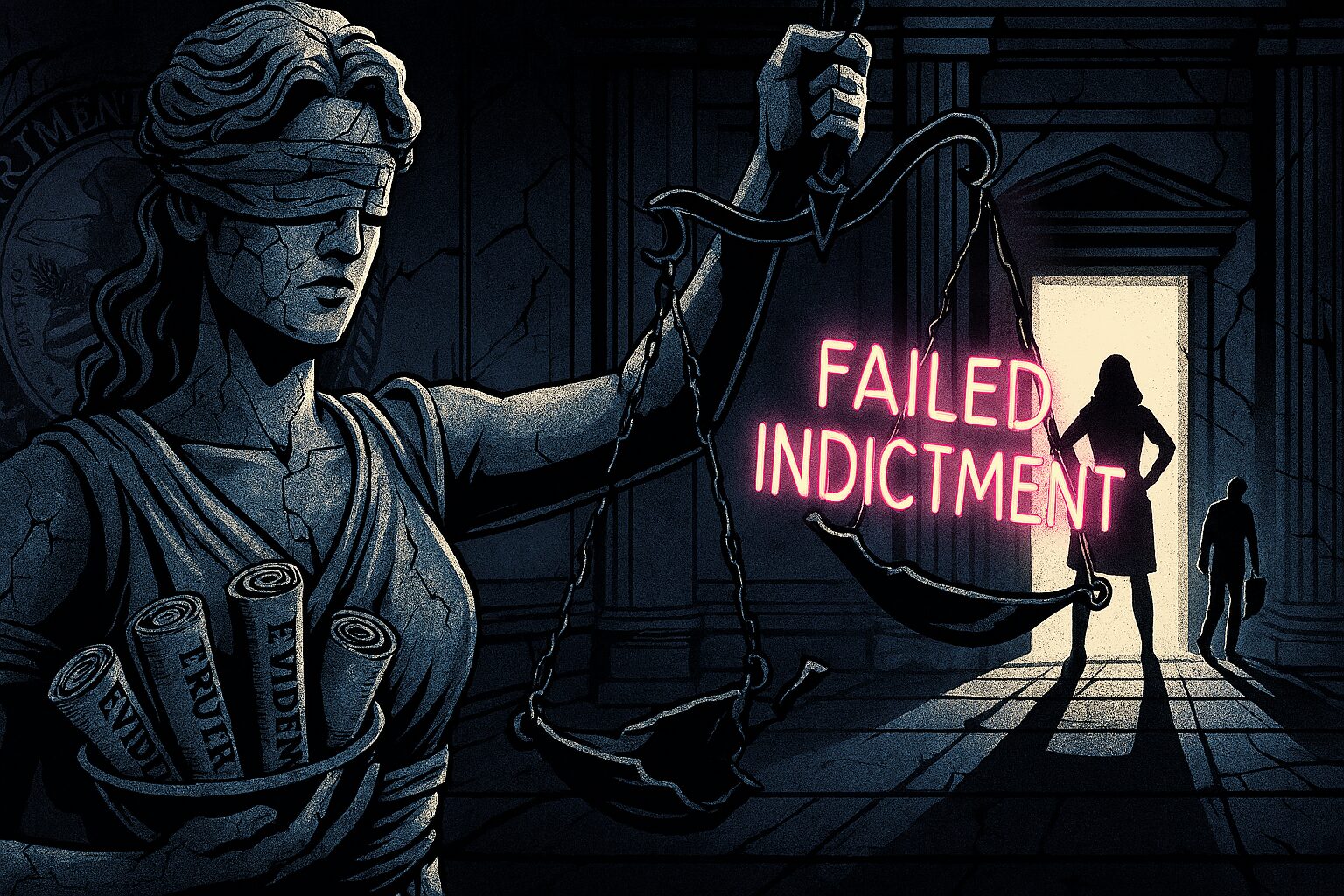
The Trump Administration's legal efforts against NY AG Letitia James failed repeatedly, raising alarming questions about the weaponization of the DOJ.
The Weaponization of Justice
The fundamental integrity of the U.S. Department of Justice (DOJ) rests on its impartiality and commitment to the rule of law, not political vendetta. Yet, the recent history of the Trump Administration’s repeated, and ultimately failed, pursuit of New York Attorney General Letitia James suggests a disturbing breach of that foundational principle, an episode that further exposes the Weaponized Political Retribution Machine Exposed. AG James, a persistent and successful challenger to the former President’s business practices, found herself on the receiving end of a federally driven criminal case.
The narrative surrounding this entire affair, which began with an indictment that was eventually dismissed and was then rejected twice by subsequent grand juries, can best be summarized as an embarrassing failure for the executive branch's political appointees. Despite the administration's aggressive posturing, the core case against AG James has been comprehensively defeated, making a legitimate indictment an impossible quest. It appears the Department of Justice cannot even get a Third Time's A Charm victory for this politically motivated case.
Policy Summary: The Allegations and Initial Indictment
The criminal proceedings against Attorney General James focused on a single count of bank fraud and one count of making false statements to a financial institution, stemming from a 2020 mortgage application for a property in Norfolk, Virginia. Prosecutors alleged that James misrepresented the property’s use—listing it as a second home rather than a rental or investment property—to secure more favorable loan terms, potentially saving approximately $19,000 over the life of the loan.
The initial indictment, which was handed down in September 2025, was secured by Lindsey Halligan, a former personal attorney for President Trump who had been appointed as the acting U.S. Attorney for the Eastern District of Virginia (EDVA) following the forced departure of career officials who reportedly resisted bringing the case due to insufficient evidence. This unprecedented move immediately raised red flags for critics concerned about the politicization of the office.
Opposing Arguments and Administration's Rationale
The administration, in its public and private statements, maintained that the charges were purely about holding an elected official accountable for criminal conduct, arguing that the DOJ was simply performing its duty to enforce the law against all persons, regardless of political standing. Proponents of the case framed the allegations as serious mortgage fraud and asserted that James should face the same scrutiny as any other citizen who allegedly lies to a bank for personal financial gain.
However, many legal experts viewed the case as exceptionally weak, noting the alleged financial gain was minimal for a federal criminal case and that discrepancies on mortgage applications are often addressed in civil, not criminal, court. The pursuit of AG James, who had successfully secured a significant civil fraud judgment against the former President's real estate empire, was widely characterized as a classic act of political retribution by the administration and its appointees.
Core Analysis & Rebuttal: A Systematic Breakdown of Failure
The legal efforts against AG James suffered three distinct, catastrophic failures that effectively delegitimized the entire enterprise:
Failure 1: The Unlawful Appointment and Judicial Dismissal
The first and most critical legal blow came in November 2025, when a federal judge ruled on motions to dismiss the charges. The judge determined that Lindsey Halligan was unlawfully appointed as the acting U.S. Attorney. Under the Federal Vacancies Reform Act, and related federal law, the court found that the 120-day clock for her interim appointment had run out and her continued service was invalid. This ruling led to the dismissal of the indictments against both AG James and former FBI Director James Comey, who was also targeted by the Trump DOJ.
This judicial dismissal underscored the administration’s apparent disregard for proper legal procedure and Senate confirmation norms, prioritizing political loyalty over legal legitimacy. The ruling effectively declared the initial indictment illegitimate, forcing the DOJ to restart its efforts from scratch with a properly authorized prosecutor.
The Third Time's A Charm Myth is Debunked by Grand Juries
Following the judge's dismissal, the DOJ—demonstrating a persistent, almost punitive resolve—attempted to secure new indictments, hoping that the adage of Third Time's A Charm would prevail. This led to two highly unusual subsequent rejections by two separate federal grand juries.
- Failure 2: In early December 2025, a grand jury in Norfolk, Virginia, refused to return a new indictment against AG James, finding the evidence presented insufficient to meet the probable cause standard.
- Failure 3: Less than a week later, prosecutors presented the same case to a new grand jury in Alexandria, Virginia, and were rebuffed for a second time in a row.
Grand jury rejections of a prosecutor's case are exceedingly rare in the federal system, a fact often encapsulated by the legal adage that a prosecutor can get a grand jury to "indict a ham sandwich." The twin rejections from two different panels, who heard only the government’s presentation of evidence, represent a stunning and embarrassing rebuke of the case's merits and the administration’s relentless pursuit of its political foe.
Conclusion: A Stain on the Department of Justice
The systematic failure of the Trump Administration’s attempts to prosecute New York Attorney General Letitia James is a profound demonstration of the perils of weaponizing the Department of Justice for political retribution. From the unlawful appointment of a loyalist prosecutor to the rejection of the underlying charges by two independent grand juries, the narrative is one of a politically motivated vendetta that failed to meet even the lowest bar for criminal prosecution.
The progressive imperative is clear: the independence of our nation’s top law enforcement agency must be sacrosanct. The repeated failures in this case should serve as a powerful cautionary tale against the use of the judicial system as a tool for political score-settling. Future Attorneys General must be vigilant in safeguarding the DOJ's neutrality and ensuring that justice remains blind to political expediency.
Call-to-Action: Citizens must demand immediate congressional oversight through the House and Senate Judiciary Committees into the processes and personnel decisions that led to the serial attempts to indict a major political opponent, to ensure such abuses of power never happen again.
Sources
- Second Grand Jury Rebuffs DOJ Attempt to Re-Indict NY AG Letitia James - Democracy Docket
- Justice Department fails twice to re-indict New York Attorney General James, AP source says - PBS NewsHour
- Trump DOJ again fails to obtain indictment from grand jury against Letitia James - MS Now
- Judge tosses James Comey, Letitia James cases, rules prosecutor was illegally appointed - PBS NewsHour
- 'Persecution, not prosecution': Ex-U.S. attorney on Trump DOJ’s failed pursuit of Letitia James - MS Now (Video)

The team is a fusion of human curiosity, passion, and a relentless pursuit of truth—structured, prompted, and informed by Web-based AI. Every piece begins with a question, a spark of insight, or a challenge to conventional thinking. Through thoughtful collaboration between human intent and artificial intelligence, the content emerges as a reflection of both emotional depth and analytical clarity.
The goal is not just to inform, but to empower. By leveraging AI as a tool for exploration—not automation—the team can craft work grounded in facts, shaped by inquiry, and driven by a commitment to clarity and accountability.