
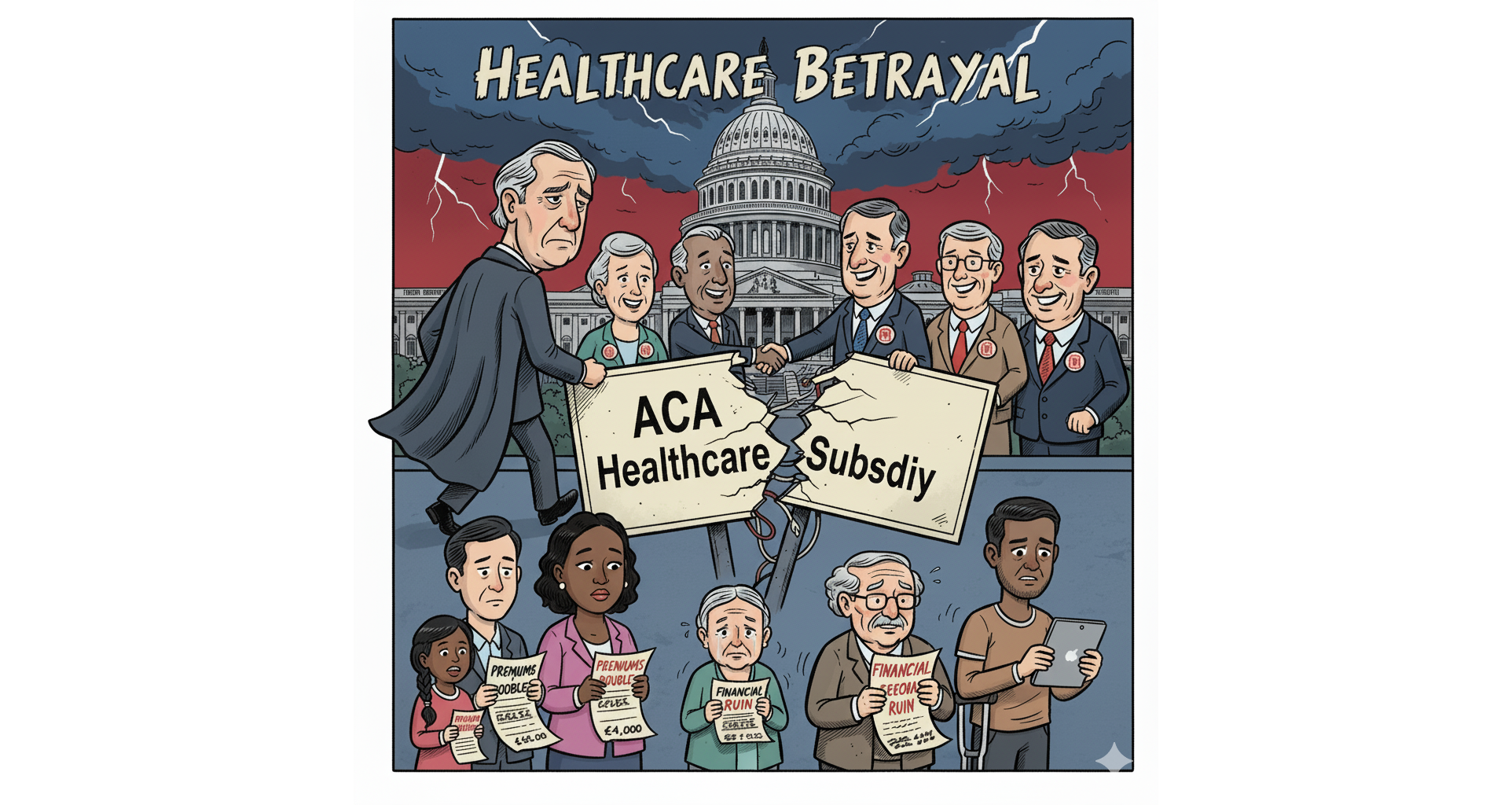
A shocking party civil war: 8 Democrats Cave on ACA Healthcare Subsidies, ending a 40-day shutdown but sparking anger over failed leadership.
Introduction: A Strategic Surrender and a Shocking Collapse
The 40-day U.S. government shutdown has ended, but at a devastating cost to the Democratic Party and American families. Eight Democrats Cave on ACA Healthcare Subsidies, breaking a unified blockade to pass a spending bill that failed to protect essential premium tax credits. This stunning reversal sacrificed the party’s central policy demand in favor of immediate institutional relief. The consequence is a furious intra-party civil war and intense progressive outrage over whether this strategic failure was pragmatic politics or a devastating capitulation.
The Financial Catastrophe of the ACA Subsidies Expiration
At the heart of the 40-day standoff were the enhanced premium tax credits, a critical provision of the Affordable Care Act (ACA) set to expire on December 31. This was not merely an abstract policy debate; it represented a looming financial catastrophe for millions. The original Democratic strategy relied on tying government funding to the extension of these credits, forcing Republicans to confront the political costs of inflicting widespread financial harm.
Timeline of Capitulation: The 8 Democrats Who Broke Ranks
The collapse of the unified Democratic front unfolded rapidly. The caucus had initially held firm for 40 days, successfully blocking 14 separate Republican attempts to advance a funding bill that did not address the healthcare crisis.
However, in a shocking move on late Sunday, November 9, 2025, eight caucus members joined Republicans to advance a spending bill, effectively breaking the stalemate. The final agreement reopened the government through January 30 but included no guaranteed extension of the ACA subsidies—only a promise for a future vote.
The members of the Democratic caucus who defected were:
- Dick Durbin (IL)
- Tim Kaine (VA)
- Jeanne Shaheen (NH)
- Maggie Hassan (NH)
- John Fetterman (PA)
- Catherine Cortez Masto (NV)
- Jacky Rosen (NV)
- Angus King (I-ME)
Their stated rationale centered on the "immediate and escalating harm" of the shutdown, choosing to prioritize immediate stability over the long-term policy goal. Senator Tim Kaine, for example, stated that their strategy was not working and that they had "no path forward on health care because the Republicans said, we will not talk about health care with the government shut down". The defectors also secured provisions that ensure furloughed federal workers would receive back pay and reverse the mass firings ordered by the Trump Administration.
The Hollow Promise: Why the Deal Failed Policy
The core of the "compromise" that secured the votes of the eight defectors was immediately criticized as a policy failure. The central concession secured was merely a non-binding promise from Senate Majority Leader John Thune (R-SD) to hold a vote on the ACA subsidies in mid-December.
Progressives, such as Representative Greg Casar, branded the deal a "betrayal" that abandoned millions of Americans for nothing more than political cover. Crucially, the promised vote was functionally useless:
- Too Late for Insurers: The deal was struck after the November 1 open enrollment deadline.
- Locked-In Rates: Insurers had already "locked in" the high 2026 premiums based on the assumption that the ACA subsidies would expire. The likelihood that gross premiums for 2026 would be adjusted downward falls to zero after the start of open enrollment.
Any legislative action in December would be too late to prevent the immediate cost hikes, turning the promised vote into political theater rather than effective policy intervention.
Operation Oust Schumer: Leadership Faces Progressive Fury
The political fallout was immediate and aimed squarely at the Democratic leadership. Progressives erupted in fury, with Representative Ro Khanna publicly calling for Senate Minority Leader Chuck Schumer to be replaced. California Governor Gavin Newsom described the deal as "Pathetic". Critics argued that Schumer either actively "blessed this surrender" or was "incapable of leading his caucus to hold the line".
The calls for Senator Schumer's resignation stem not only from the shutdown failure but also from deeper concerns regarding his long-term leadership. A formal letter requesting his resignation highlighted the imperative for a "Generational Transition in Senate Leadership", arguing that a younger, renewed voice is essential due to a perceived need for a "more forceful and transparent approach to governance" and a "lack of leadership and transparency in decisively calling out the more egregious actions of the Trump Administration". This appeal further posited that stepping down would be a "monumental act of statesmanship," securing his legacy by prioritizing the institution's dynamism over personal tenure. This widely circulated request is available here: /re-formal-request-for-resignation-as-senate-minority-leader/.
This perceived complicity drove a grassroots campaign dubbed "Operation Oust Schumer," reflecting a profound ideological fracture between the establishment and the enraged progressive base. An Our Revolution survey found that 90% of grassroots respondents want Schumer to step aside. The executive director of Our Revolution stated that if Schumer couldn't keep his caucus in line, he is inept, and if he secretly backed the surrender, he is a liar.
Conclusion: Accountability After the Surrender
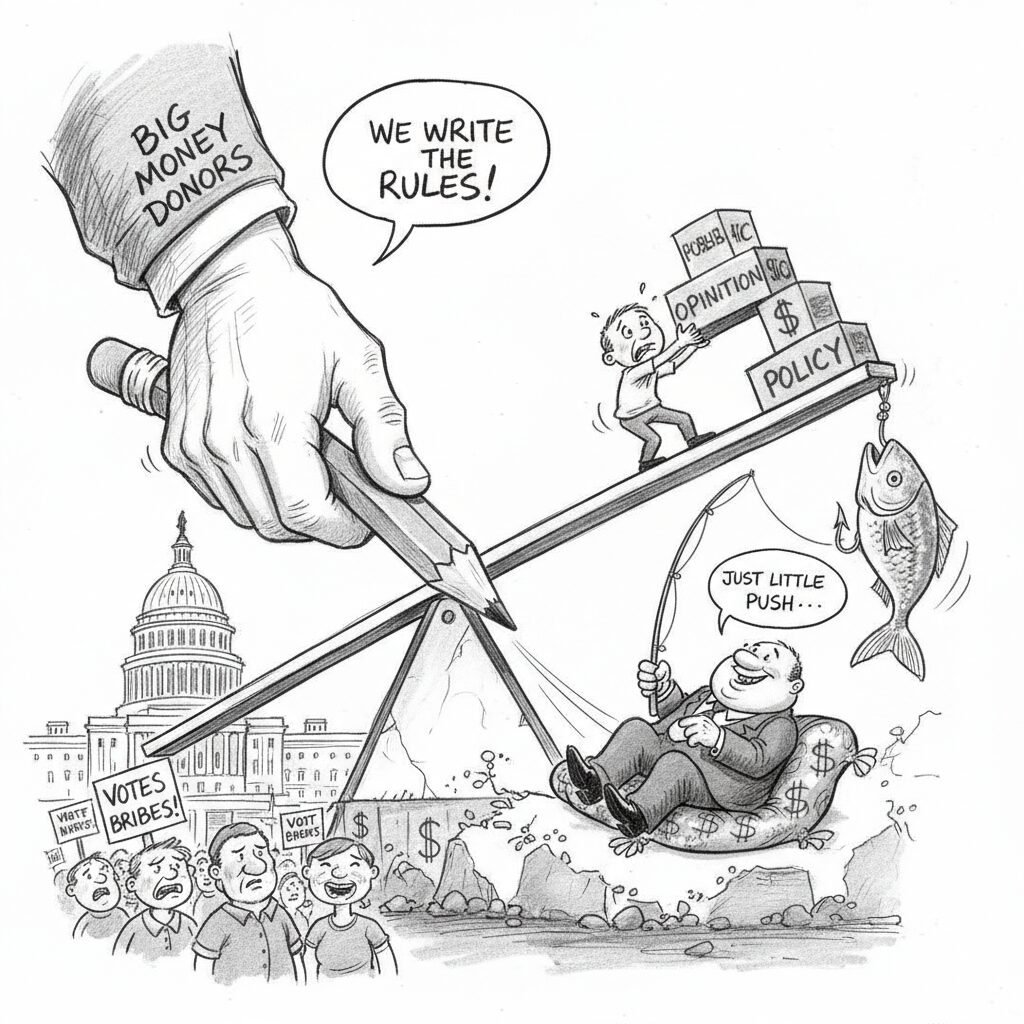
The failure of the Democrats Cave on ACA Healthcare Subsidies means severe financial and health consequences for millions of Americans who now face staggering premium hikes. The expiration of the enhanced subsidies is projected to cause premiums to increase by an average of 114% and could result in up to 5 million Americans becoming uninsured.
However, if there is a positive political outcome to be found in this strategic failure, it is that the perceived betrayal has served as a powerful catalyst. It has galvanized the progressive grassroots, creating an undeniable mandate for accountability and reform within the Democratic Party structure. While the legislative battle for affordable healthcare was lost in this shutdown, the internal fight for a Democratic party willing to hold the line for working families has just begun.
Sources
- Strategic Capitulation and Political Fragmentation: A Deep Dive into the Democratic Caucus’s Vote on the 2025 Government Funding Bill and the ACA Subsidy Crisis
- Senate government shutdown deal leaves many Democrats furious ...
- We Got F***ed by Chuck and 8 PATHETIC Democrats Who Caved to Republicans—They MUST Pay for This! (From the transcript of The Humanist Report)
- ‘We’ll likely have to sell our house’: skyrocketing premiums at heart of shutdown fight
- Congress inches towards ending shutdown with no extension of ACA subsidies
- Angry Democrats call on Schumer to resign after eight vote to end shutdown - The Guardian
- Survey Shows Large Majority of Grassroots Democrats Back Primary Challenges for Schumer and Jeffries | Common Dreams
- 5 Consequences If ACA Premium Subsidies End in 2026 | AJMC
- Expiring Premium Tax Credits Lead to State Job Losses in 2026 | Commonwealth Fund
- The Estimated Effects of Enacting Selected Health Coverage Policies on the Federal Budget and on the Number of People With Health Insurance

The team is a fusion of human curiosity, passion, and a relentless pursuit of truth—structured, prompted, and informed by Web-based AI. Every piece begins with a question, a spark of insight, or a challenge to conventional thinking. Through thoughtful collaboration between human intent and artificial intelligence, the content emerges as a reflection of both emotional depth and analytical clarity.
The goal is not just to inform, but to empower. By leveraging AI as a tool for exploration—not automation—the team can craft work grounded in facts, shaped by inquiry, and driven by a commitment to clarity and accountability.
Leave a Reply