An analytical look at how legislative maneuvering and shifting partisan stances reflect structural challenges to congressional oversight and governance.
As debate intensifies across Capitol Hill, the legislative dynamics surrounding executive oversight have taken center stage. Observers of congressional procedure are watching closely as lawmakers navigate complex political currents to define the scope of investigative authorities. In evaluating recent legislative efforts and committee investigations, analysts warn that strategic partisan pivots represent a fundamental challenge to institutional integrity. Understanding how political strategies evolve during key legislative cycles reveals the Republican Monster: The Last Breath of traditional partisan alignment, illustrating how structural mechanisms can be used to reframe accountability, shift public focus, and influence electoral outcomes.
Policy Summary & Context
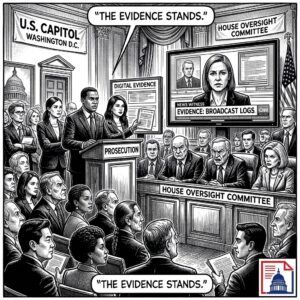
In recent legislative sessions, congressional committees have exercised their statutory subpoena power under Article I of the Constitution to investigate potential conflicts of interest, executive branch oversight, and administration compliance. These investigative frameworks rely on tools such as the House Oversight and Accountability Committee, the Senate Judiciary Committee, and formal legislative inquiries authorized under House and Senate rules.
The debate centers on whether recent committee actions represent genuine institutional oversight or calculated political repositioning. Historically, congressional investigations serve three primary purposes:
- Legislative Fact-Finding: Informing the drafting of statutory reforms.
- Executive Accountability: Ensuring funds appropriated by Congress are spent in accordance with legislative intent.
- Public Transparency: Providing public access to governmental operations through open hearings and published reports.
Opposing Arguments
Proponents of current legislative investigations argue that committee oversight is non-partisan in its constitutional mandate. Advocates contend that Congress has a duty to examine administrative decisions regardless of political affiliation, and that formal findings serve to strengthen public trust in democratic institutions. From this perspective, legislative probes—even those initiated late in an administration's tenure—are necessary measures to ensure compliance with federal ethics statutes and constitutional boundaries.
Core Analysis & Structural Critique
From a progressive advocacy perspective, analyzing these legislative maneuvers requires looking beyond surface-level committee statements to examine systemic governance patterns. When political parties pivot their stance on oversight depending on electoral math, it undermines the consistency required for effective legislative checks and balances.
       CONGRESSIONAL OVERSIGHT FRAMEWORK

+-----------------------------------------------+
|             Article I Authority               |
|    (Subpoena Power & Committee Hearings)      |
+-----------------------------------------------+
                        |
                        v
+-----------------------------------------------+
|            Legislative Actions                |
|  - Ethics Inquiry Authorization               |
|  - Appropriations Conditions                  |
|  - Statutory Accountability Mandates          |
+-----------------------------------------------+
                        |
                        v
+-----------------------------------------------+
|              Public Outcomes                  |
|  - Transparency & Statutory Reform            |
|  - Systemic Checks on Executive Power         |
+-----------------------------------------------+
The challenge for legislative integrity occurs when oversight tools are deployed selectively. When lawmakers spend years ignoring or downplaying compliance concerns, only to embrace investigative findings when politically advantageous, the primary goal shifts from systemic reform to political self-preservation. Real institutional accountability requires consistent application of ethics regulations, campaign finance transparency, and conflict-of-interest laws regardless of which party holds the executive branch.
Conclusion
The integrity of congressional oversight depends on maintaining rigorous, non-partisan standards for accountability. Restoring public faith in legislative institutions requires moving beyond short-term political maneuvering toward permanent structural reforms—including strengthened statutory ethics enforcement, expanded congressional subpoena powers, and robust protections for institutional transparency. Citizens must hold elected officials accountable to these standards consistently, ensuring that legislative power serves democratic governance rather than partisan strategy.
Sources
- House Committee on Oversight and Accountability - U.S. House of Representatives
- Senate Judiciary Committee Oversight Responsibilities - U.S. Senate
- Congressional Research Service: Overview of Congressional Subpoena Power - Congressional Research Service

The team is a fusion of human curiosity, passion, and a relentless pursuit of truth—structured, prompted, and informed by Web-based AI. Every piece begins with a question, a spark of insight, or a challenge to conventional thinking. Through thoughtful collaboration between human intent and artificial intelligence, the content emerges as a reflection of both emotional depth and analytical clarity.
The goal is not just to inform, but to empower. By leveraging AI as a tool for exploration—not automation—the team can craft work grounded in facts, shaped by inquiry, and driven by a commitment to clarity and accountability.