
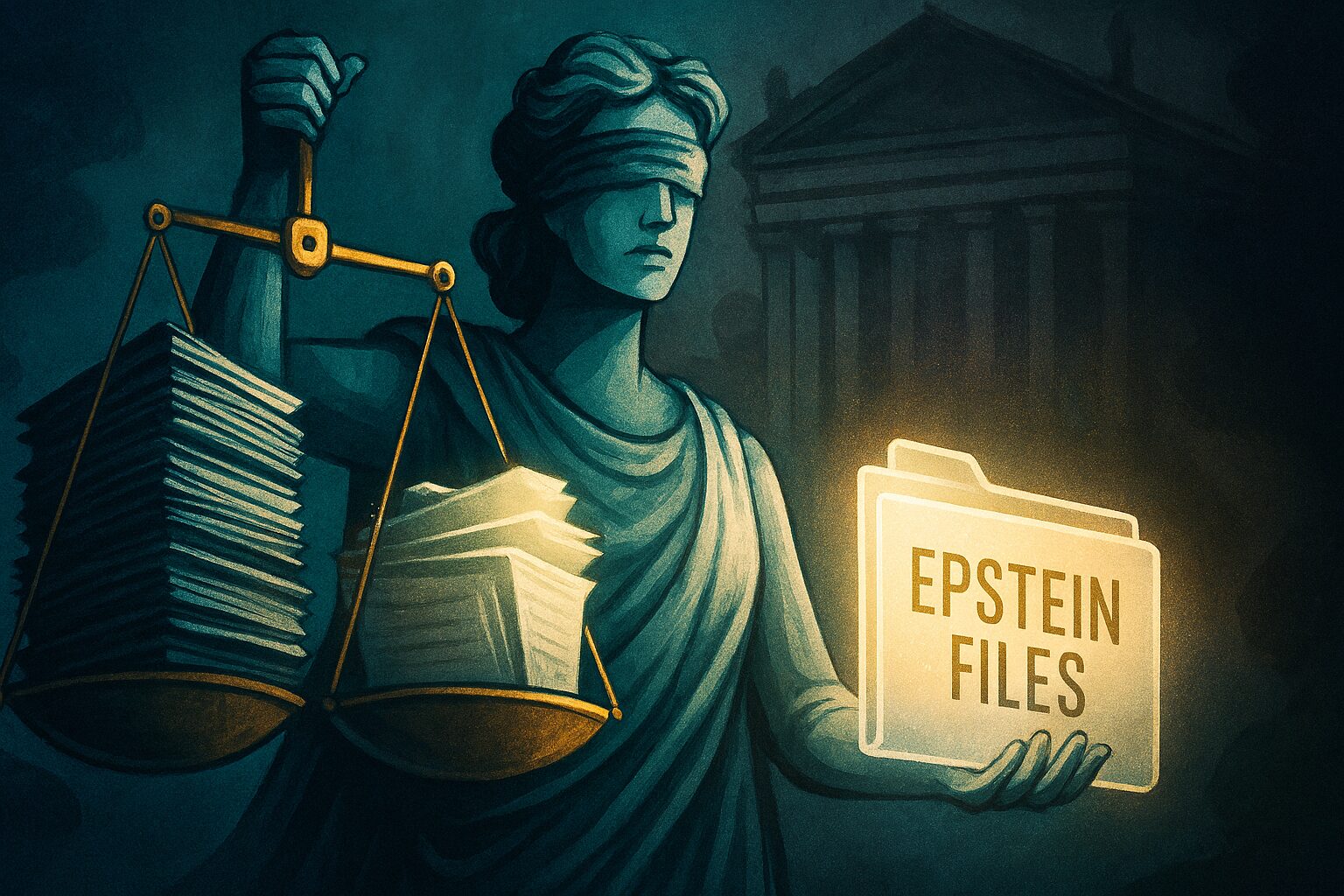
Federal Judge Tanya Chutkan's recent order is a forceful move for transparency, pressuring the Justice Department to release records on the Epstein files.
The pursuit of justice and transparency in the long-running saga of Jeffrey Epstein's vast sex trafficking operation and the powerful figures who enabled it has once again turned to the federal judiciary. U.S. District Judge Tanya Chutkan, a figure known for her rigorous approach to the rule of law, has delivered a Surgical Precision Callout to the Justice Department (DOJ) under the current administration. This directive, in the form of an order to expedite a Freedom of Information Act (FOIA) request, targets the administration's abrupt reversal on its previous commitment to full transparency regarding the expansive "Epstein files."1 For progressive advocates, this judicial action underscores a critical need for external checks on executive branch secrecy, particularly when that secrecy appears to shield politically sensitive figures. The key phrase, "Surgical Precision Callout," is a testament to the judge’s focus on records tied directly to media-reported concerns that the former President's name within the files may have prompted the reversal.
Policy Summary: The Transparency Fight
The legal and political battle over the release of the comprehensive "Epstein files"—which include a massive trove of documents, interviews, and electronic files from the federal investigation—has been long and fraught.2 In July, the DOJ announced a joint FBI and DOJ memo concluding that their review "did not uncover evidence that could predicate an investigation against uncharged third parties," effectively shutting down the investigation into co-conspirators and halting the promised full release of documents.3 This decision came despite the subsequent passage of the bipartisan Epstein Files Transparency Act, which mandates the release of materials by a specific deadline.4
This perceived lack of government transparency spurred a lawsuit by the progressive legal nonprofit Democracy Forward.5 Their FOIA request sought internal DOJ records related to the administration's decision, focusing on communications that might reveal why the promised full disclosure was suddenly reversed.6
Opposing Arguments: The Defense of Secrecy
The administration and its allies have historically invoked traditional legal defenses to restrict the release of information. These arguments typically center on:
- Grand Jury Secrecy: Federal Rule of Criminal Procedure 6(e) mandates that grand jury proceedings, including transcripts and exhibits, remain secret unless a few, narrow, and extraordinary exceptions are met.7 Multiple federal judges have already rejected administration requests to unseal this specific material, arguing that the government did not meet the "special circumstances" threshold.8
- Victim Privacy: Protecting the identity and privacy of victims of child sexual abuse and trafficking is a critical and paramount concern. However, progressive critics argue that this necessary protection is often used as a blanket shield to cover information that is merely politically embarrassing or implicating high-profile individuals.
- Judicial Versus Executive Authority: Some judges, in denying the release of grand jury materials, have pointed out that the executive branch's DOJ is the entity with the vast majority of the investigative files (estimated at around 100,000 pages) and is therefore the "logical party to make comprehensive disclosure," suggesting that the administration's court motions for grand jury records were a mere "diversion" from releasing the documents in its direct possession.9
Progressive Analysis & The Judicial Surgical Precision Callout
From a progressive advocacy viewpoint, the battle over the Epstein files is a classic test of whether the rule of law applies equally to the powerful and the politically connected. The refusal to release the full body of investigative files suggests an institutional cover-up designed to protect elites from accountability.
Judge Chutkan's recent order directly counters this obstructionist behavior. By granting Democracy Forward's motion to expedite the FOIA request, Judge Chutkan utilized her judicial authority to accelerate the release of potentially explosive, public-interest information.10 Her ruling explicitly noted that the request was "plainly tied to the concern discussed in the media that the Justice Department reversed its position on the disclosure of the Epstein documents only after Attorney General [Pam] Bondi reportedly informed the President that his name appeared in the files."11
Targeting Political Self-Preservation
This judicial action represents a Surgical Precision Callout against political self-preservation veiled as institutional procedure. By linking the urgency of the FOIA request to the specific media concerns about the former President's potential involvement, Judge Chutkan focused the legal process on the heart of the progressive critique: that the DOJ's handling of the files has been compromised by political consideration rather than purely prosecutorial discretion.12
This decision pushes back against the administrative practice of delaying or stonewalling requests until public interest wanes. It is an act of judicial oversight that prioritizes the public's right to know over the executive branch's desire for political insulation. It demonstrates that the courts, even in the face of executive resistance, can and must demand accountability on issues of extreme public importance. For progressives, this is a clear victory for transparency and a testament to the fact that justice must be neither blind to the powerful nor beholden to political timelines.
Conclusion
Judge Chutkan's order for expedited processing of records related to the DOJ's handling of the Epstein files is a significant step toward fulfilling the promise of the Epstein Files Transparency Act. It places necessary pressure on the Justice Department to reveal why it abruptly reversed course on the disclosure of records, specifically targeting the documented concerns that the decision was politically motivated.13 The public, and especially the survivors, deserve full and unvarnished access to the truth, and the judiciary has now stepped in to expedite that process.
Call-to-Action: Citizens must continue to pressure their elected representatives on the House Judiciary and Senate Judiciary Committees to utilize their full oversight powers—including the issuance of subpoenas—to ensure the Justice Department fully complies with Judge Chutkan's order and the mandates of the Epstein Files Transparency Act. The integrity of our government depends on ensuring that no one, regardless of political power, can evade accountability.
Sources
- Judge orders expedited processing of request for records related to DOJ's handling of Epstein files - Everett Post
- Ranking Member Raskin Releases New Information on Trump DOJ's Decision to Kill Investigation Into Epstein's Co-Conspirators and Demands Answers from AG Bondi - House Committee on the Judiciary
- Judge declines to unseal grand jury material in Jeffrey Epstein case - CBS News
The video below discusses the political context surrounding the attempts to release the Epstein files and the involvement of the Trump administration.
Epstein files bill heads to Trump's desk, U.S. pushing for Russia-Ukraine talks, more | The Takeout

The team is a fusion of human curiosity, passion, and a relentless pursuit of truth—structured, prompted, and informed by Web-based AI. Every piece begins with a question, a spark of insight, or a challenge to conventional thinking. Through thoughtful collaboration between human intent and artificial intelligence, the content emerges as a reflection of both emotional depth and analytical clarity.
The goal is not just to inform, but to empower. By leveraging AI as a tool for exploration—not automation—the team can craft work grounded in facts, shaped by inquiry, and driven by a commitment to clarity and accountability.