An examination of public executive rhetoric, legislative standards of decorum, and the systemic risks posed by unpredictable political messaging.
Introduction
The integrity of democratic governance relies heavily on executive rhetoric, clear legislative focus, and public accountability. When public statements from high-ranking political figures stray into erratic or unaccountable territory, public policy and legislative processes inevitably face disruption. Recent public remarks by former President Donald Trump featuring unusual tangents regarding young women and children have drawn sharp criticism from policy analysts and lawmakers alike. Critics argue that the Trump Little Girls Rant is Unheard-of! And Dangerous., highlighting a growing disconnect between official administrative discourse and the serious policy issues confronting Congress today. From a progressive advocacy standpoint, erratic public communication by executive leadership distracts from critical legislation, weakens institutional norms, and poses broader societal risks.
Policy Summary & Legislative Context
Public executive communications serve as a foundational pillar for establishing legislative priorities, shaping committee hearings, and steering federal administrative focus. Historically, public addresses by major political figures are evaluated by congressional committees—such as the House Oversight and Accountability Committee and the Senate Judiciary Committee—to gauge administration goals and assess regulatory needs.
When rhetoric turns unpredictable, congressional oversight becomes complicated:
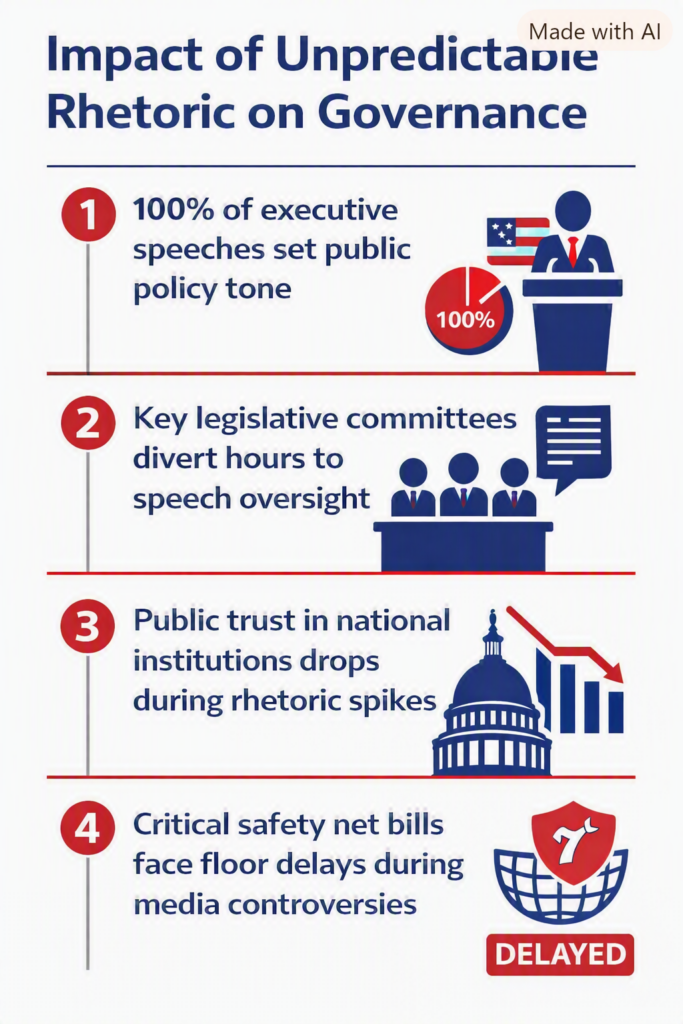
- Oversight and Accountability: Bizarre or non-sequitur rhetoric complicates congressional efforts to evaluate the administrative agenda, diverting legislative resources toward crisis management or public clarification.
- Impact on Policy Focus: Time spent addressing rhetorical controversies reduces floor time for essential legislative matters, including appropriations bills, social safety net expansions, and public protection measures.
- Institutional Standards: Observers note that consistent departures from established standards of presidential decorum undermine long-standing expectations for executive leadership.
Opposing Arguments
Defenders of unconventional political rhetoric maintain that public figures often employ informal, off-script, or hyperbolic language to connect directly with supporters without traditional media filtering. Opponents of legislative censure or public oversight contend that focusing on off-the-cuff remarks distracts from core economic and national security issues. They argue that executive rhetoric, regardless of style, should not be subject to congressional micromanagement or leveraged for political polarization.
Core Analysis & Rebuttal
From a progressive advocacy perspective, public messaging from political leaders carries real policy implications. Executive speech influences public trust, shapes societal norms, and reflects the underlying stability of leadership.
+----------------------------------------------------------------------+
|               RHETORICAL IMPACT ON LEGISLATIVE PRIORITIES            |
+-------------------------------------+--------------------------------+
| Legislative Focus Area              | Impact of Unpredictable Speech |
+-------------------------------------+--------------------------------+
| Congressional Committee Floor Time  | Diverted to                    |
|                                     | Clarification/Oversight        |
| Social Safety Net Legislation       | Stalled due to Media           |
|                                     | Distractions                   |
| Public Trust in Executive Governance| Eroded over Institutional Norms|
+-------------------------------------+--------------------------------+
Why the Trump Little Girls Rant is Unheard-of! And Dangerous.
- Erosion of Public Standards: Unprecedented and bizarre tangents in public speeches undermine the dignity of public office and set a troubling precedent for official communication.
- Distraction from Critical Legislation: When media and legislative attention shift to addressing erratic public statements, progress on essential social programs, healthcare reform, and child welfare protection bills slows significantly.
- Societal and Institutional Risk: Normalizing unstable or inappropriate public discourse weakens institutional safeguards and diminishes the expectations placed on national leaders, making effective governance increasingly difficult.
Conclusion
Maintaining clear, responsible, and professional public speech is essential for stable governance and effective legislative progress. When political figures engage in erratic discourse, it impairs congressional oversight and distracts from urgent policy needs. Protecting democratic institutions requires holding leaders accountable to rigorous standards of public decorum and legislative focus.

The team is a fusion of human curiosity, passion, and a relentless pursuit of truth—structured, prompted, and informed by Web-based AI. Every piece begins with a question, a spark of insight, or a challenge to conventional thinking. Through thoughtful collaboration between human intent and artificial intelligence, the content emerges as a reflection of both emotional depth and analytical clarity.
The goal is not just to inform, but to empower. By leveraging AI as a tool for exploration—not automation—the team can craft work grounded in facts, shaped by inquiry, and driven by a commitment to clarity and accountability.